
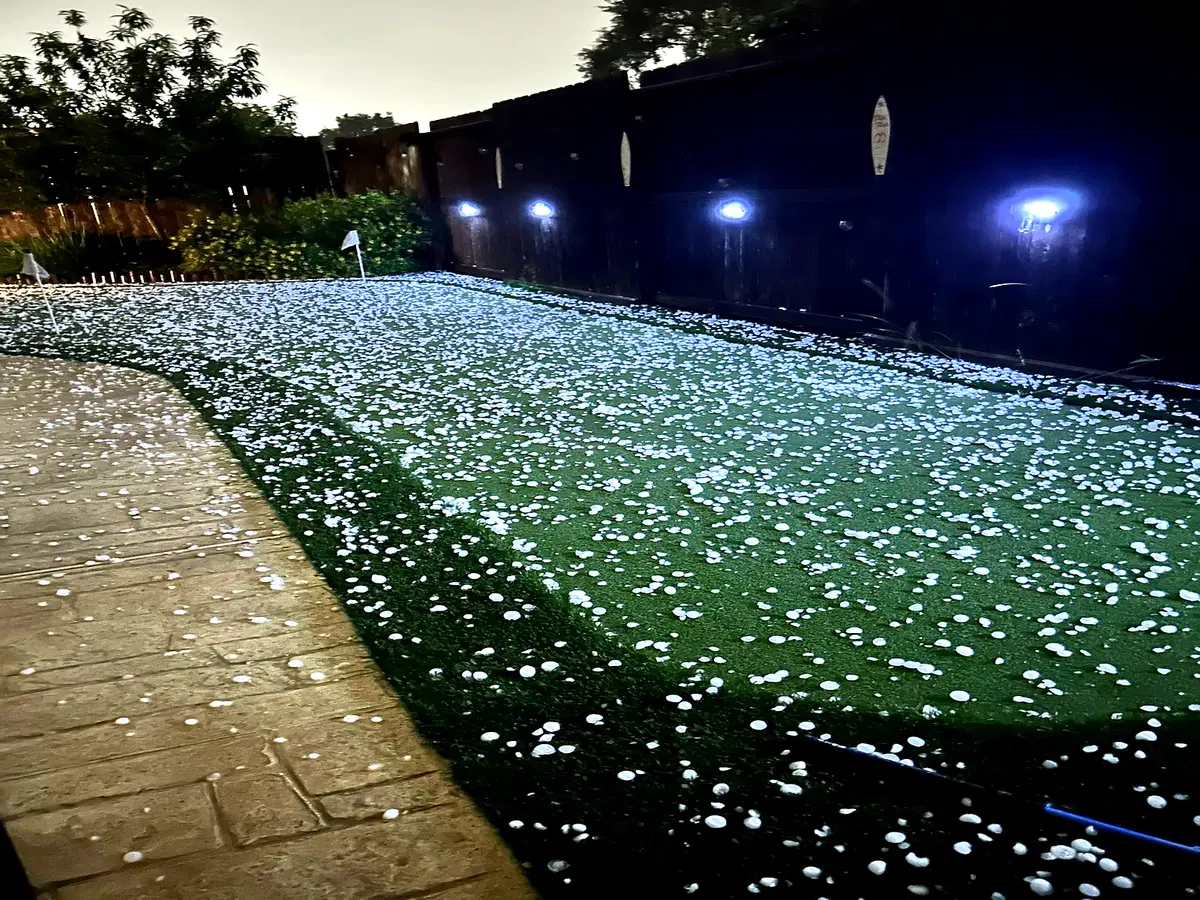
What storms do to Pearland roofs
Pearland gets the full range of Gulf Coast weather: spring hailstorms rolling in from the west, summer thunderstorms with straight-line winds, and tropical systems from June through November. The 2024 Houston derecho and Hurricane Beryl showed how quickly an entire area's roofs can be damaged in a single afternoon. Each type of storm leaves a different signature on an asphalt shingle roof.
Hail damage
- Bruises: soft spots where the hailstone fractured the shingle mat; they feel spongy to the touch.
- Granule loss: dark, round spots where the protective granules were knocked off, exposing asphalt to UV.
- Cracked or split shingles, especially on older, brittle roofs.
- Collateral damage that's easier to spot: dents on metal vents, gutters, downspouts, AC fins and window screens.
Wind damage
- Creased tabs: shingles that lifted and folded back — they may lie flat again but the seal is broken.
- Missing shingles and ridge caps, often found in the yard after the storm.
- Lifted flashing and drip edge that lets wind-driven rain in sideways.
- Debris and limb strikes that puncture shingles or crack decking.
Right after the storm: a checklist
Short version below — or print the full Pearland Storm & Roof Damage Checklist.
- Stay off the roof. Look from the ground and from upstairs windows.
- Walk the yard for shingles, ridge caps and granules collecting at downspout outlets.
- Photograph dents on vents, gutters, the AC unit and your car — they help show hail size.
- Check ceilings and the attic (with a flashlight) for fresh stains or daylight.
- Note the storm date and time. Your insurer will ask.
- Call for an inspection. If there's an opening, get emergency tarping first.
Documenting damage for your insurance claim
Your insurance adjuster decides coverage, not the roofer. But good documentation makes that conversation far easier. Ask the roofer for:
- Dated photos of each slope, with close-ups of hits marked with chalk.
- Photos of collateral damage (vents, gutters, flashing).
- A written scope listing what's damaged and what repair or replacement it needs.
- Receipts for any emergency tarping or temporary repairs.
Report storm damage promptly — most policies have time limits for filing.
Watch for storm chasers
After every big Houston-area storm, out-of-town crews knock on doors. Some are fine; some disappear once the deposit clears. A few simple rules protect you (full details in our guide How to Spot a Storm Chaser in Pearland):
- No large upfront payments for a repair that hasn't started.
- Nobody should offer to "cover your deductible." Texas law prohibits contractors from waiving or paying a homeowner's insurance deductible.
- Get it in writing — scope, price, materials and warranty.
- Ask for proof of insurance and local references. Texas doesn't require a state roofing license, so insurance, a physical local presence and manufacturer certifications matter.
- Don't sign anything that assigns your insurance benefits to the contractor without reading it carefully.
Repair or replace after hail?
Scattered wind damage is usually repairable — replace the missing and creased shingles, reseal, and re-secure flashing. Widespread hail bruising across multiple slopes is different: spot repairs can't restore a roof whose mat is fractured everywhere, and replacement is often the realistic outcome. A roofer can show you the evidence slope by slope so you can make that call with your adjuster. Small leaks that show up weeks later are a roof leak repair job.