
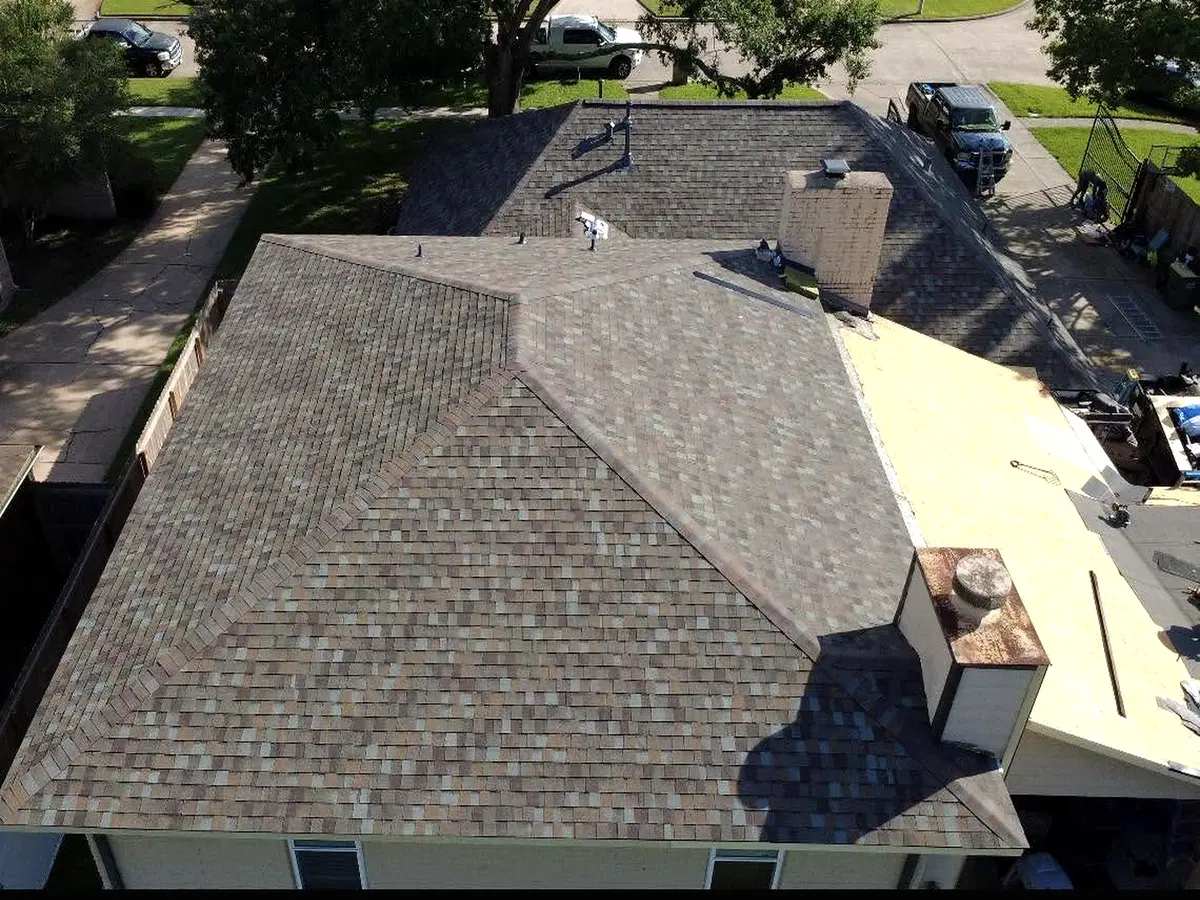
Why roofs in Alvin get tested
Alvin is a city of about 27,000 in Brazoria County, around 10 miles south of Pearland on SH 35. It's also famous among weather watchers: during Tropical Storm Claudette in July 1979, Alvin recorded about 42 inches of rain in 24 hours — long cited as a U.S. record. Records like that are rare, but heavy, long-lasting rain from Gulf systems isn't.
That kind of rain doesn't just find holes; it finds every marginal detail. A pipe boot that's fine in a passing shower, a valley with a little debris, a wall flashing that was never lapped right — all of them show up when the rain goes on for hours.
Common roofs and problems in Alvin
- Older in-town homes with shingle roofs that have been patched over decades, and sometimes more than one layer of shingles.
- Metal roofs on rural homes, barns and shops — loose fasteners, worn washers and seam leaks are typical.
- Newer subdivisions with architectural shingles, where wind-lifted tabs and pipe boots are the usual issues.
- Gutters and valleys overwhelmed in long downpours, backing water under the first courses of shingles.
During and after a heavy rain event
- Watch ceilings near exterior walls, chimneys and skylights — that's where wind-driven rain gets in.
- Catch water and protect valuables; switch off circuits near water.
- Once it's safe, check the attic with a flashlight for wet decking or insulation.
- Photograph everything for your insurer, then call.
A roofer can install emergency tarping if there's an opening, then trace the source with a proper leak repair. After wind or hail, start with a post-storm inspection.
Flood vs. roof damage
Rising water is a flood-insurance matter; rain coming through a damaged roof is generally a homeowners-policy matter. After a big storm, document the two separately. More on claims on our storm & hail damage page.