
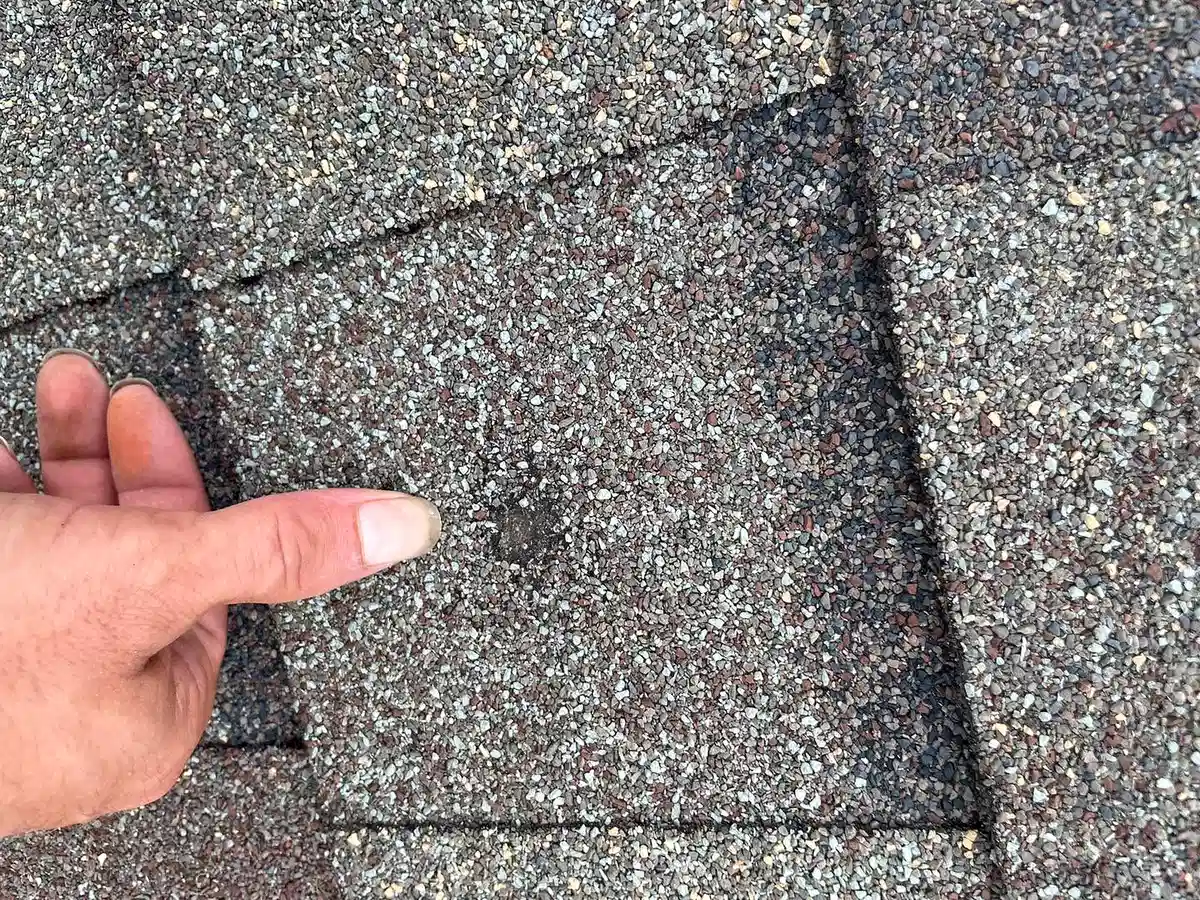
When to get your roof inspected
- After hail — especially if you see dents on gutters, vents, the AC condenser or cars.
- After high wind or a tropical system — if you found shingles or ridge caps in the yard, or neighbors are getting roofs repaired.
- After a tree or large limb hits the roof, even if nothing looks broken.
- When a new ceiling stain appears and you're not sure where the water is coming from.
- Before hurricane season (it starts June 1) on roofs more than 15 years old.
- When buying or selling a home — a roofer's inspection goes deeper than a general home inspection on the roof itself.
What a thorough inspection covers
On the roof
- Each slope checked for hail hits, bruising, granule loss, cracks and punctures — hits typically marked with chalk and counted in a test square.
- Lifted, creased and missing shingles; ridge and hip caps.
- Flashing at walls, chimneys and valleys; pipe boots; vents and skylights.
- Drip edge, gutters and downspouts, and dents on soft metals that show hail size.
In the attic
- Water staining or wet insulation on the decking and rafters.
- Daylight through the deck, which reveals punctures and gaps.
- Ventilation and signs of overheating or condensation — and whether an attic AC drain pan is the real source of a "leak".
What you should get afterwards
- Dated photos of each slope plus close-ups of any damage.
- A plain-language summary: no damage, repairable damage, or widespread damage.
- If there's damage, a written scope and estimate — shingle repair, leak repair or replacement.
That documentation is what makes the conversation with your insurance adjuster straightforward. For how claims usually work, see storm & hail damage repair.
Drone vs. on-roof inspections
Drones are useful for steep or fragile roofs and give a good overview. But hail bruising often has to be felt by hand to confirm, and attic checks need a person inside. The best inspections combine an overview with hands-on checks where it's safe.
Cost
Many roofers offer free inspections after storms because they're hoping to quote the repair. Independent, report-only inspections commonly run a few hundred dollars. Either way, an inspection is no obligation to hire anyone — and a trustworthy roofer will tell you when there's no damage worth claiming.
Be wary of door-knockers
After big Houston-area storms, crews canvass neighborhoods offering inspections. Don't let anyone on your roof without checking who they are, never sign a contract on the spot, and be skeptical of anyone who finds "damage" on every house on the street. Calling a roofer you chose is the safer way to get the same inspection. See how to spot a storm chaser.