
Where Pearland roof leaks actually start
Water travels. It runs down the roof deck, along a rafter or across the top of the ceiling drywall before it shows up as a stain — sometimes several feet from where it entered. On the asphalt shingle roofs that cover most Pearland homes, the entry point is almost always one of these:
- Pipe boots (plumbing vent flashing). The rubber collar around each vent pipe cracks after years of Texas sun. It is the single most common leak source we hear about, and one of the cheapest to fix.
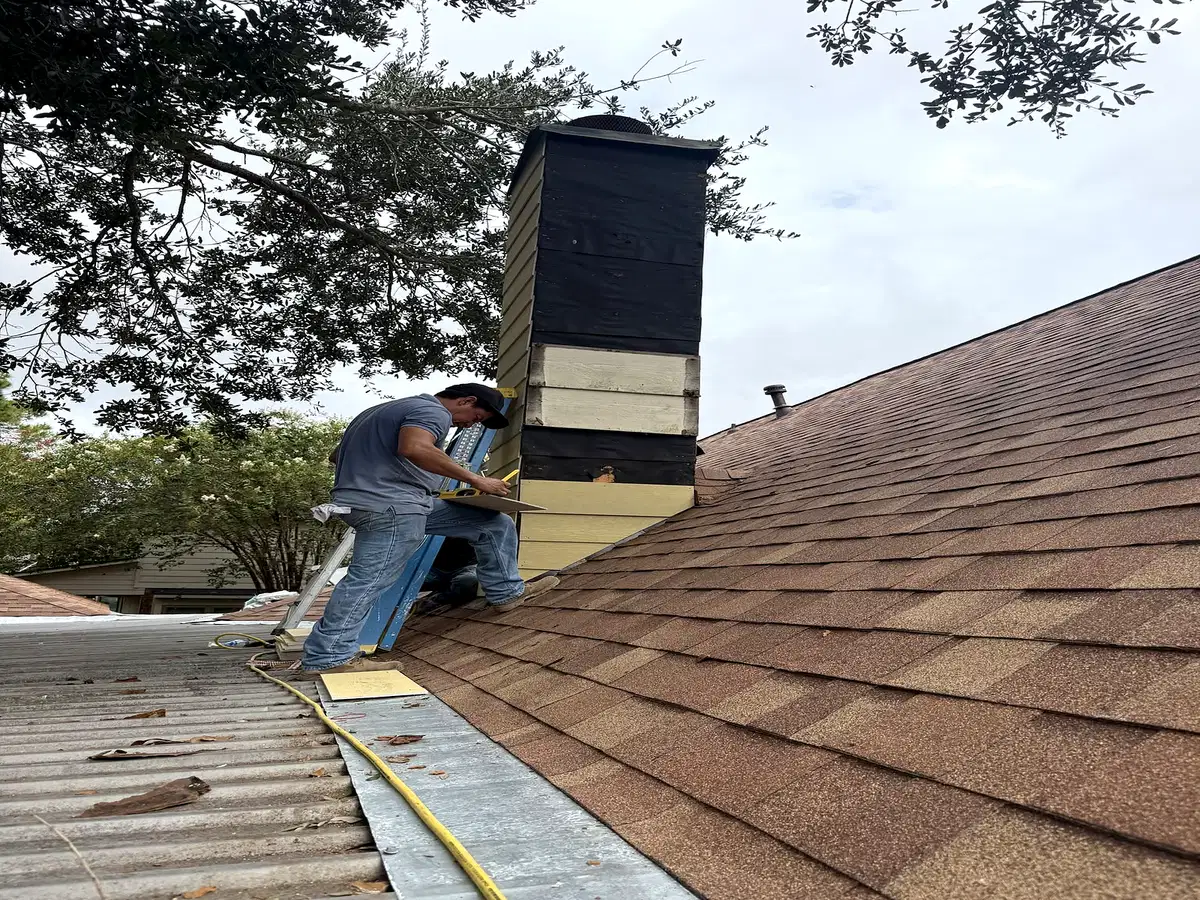
- Step and wall flashing. Where a roof meets a second-story wall, a chimney chase or a dormer, missing or poorly lapped flashing lets wind-driven rain in sideways.
- Valleys. Two roof planes meet and concentrate water. Debris from oaks and pines, or a worn valley, sends it under the shingles.
- Wind-lifted shingles and ridge caps. Older shingles lose their seal. One strong gust lifts a tab, and the next storm drives rain underneath.
- Exposed or backed-out nails. Nail heads that work loose through heat cycles punch small holes in the shingle above them.
- Roof-to-gutter edge and drip edge. Clogged gutters back water up under the first course of shingles.
Is it really the roof? Check the attic AC first
In Pearland, many homes have the air handler in the attic. When its condensate drain clogs, the pan overflows and leaves a ceiling stain that looks exactly like a roof leak — usually in summer, and often when it hasn't rained. If the stain is near the attic unit or appeared on a dry day, have the condensate line checked too. A roofer will tell you if the roof isn't the culprit; that's a five-minute conversation that can save you a repair you don't need.
What to do while you wait for the roofer
- Put a bucket under the drip and towels around it. Move furniture and electronics.
- If the ceiling is bulging with water, poke a small hole at the lowest point to drain it into the bucket — it limits how much drywall comes down.
- If water is near a light fixture or outlet, turn off that circuit at the breaker panel.
- Photograph the stain, the drip and anything wet, with a date on the photos if your phone adds one.
- Don't go on the roof in the rain. A wet shingle roof is slick, and most falls happen right at the edge.
How a proper leak repair is done
A roofer who knows Gulf Coast roofs works from the inside out: they look at the stain, check the attic for the wet path on the decking, then go to the roof above it and inspect every penetration and transition upslope. The fix is usually targeted — a new pipe boot, re-lapped step flashing, a replaced section of valley or a handful of shingles sealed and re-nailed. If the decking underneath has gone soft, that section gets replaced too, so the new shingles have something solid to hold.
If it's still raining or the opening is large, the roofer may install a temporary cover first and come back for the permanent repair. See emergency roof tarping for how that works.
Typical roof leak repair costs in Pearland
These are general ranges to help you plan, not quotes. Your roofer prices the job after seeing it.
| Repair | Typical range | Notes |
|---|---|---|
| Pipe boot replacement | $150–$450 | Per boot; more if shingles around it need replacing |
| Flashing repair (wall, chimney, dormer) | $300–$1,200 | Depends on length and access |
| Shingle section repair | $350–$1,000 | Matching older shingle colors can be the hard part |
| Valley repair | $500–$1,500 | Larger if decking is soft |
| Decking replacement | $75–$150 per sheet | Plus the roofing over it |
After-hours and storm-surge visits can cost more. Ask before work starts, and get the estimate in writing.
Leaks after a storm: insurance basics
A leak caused by sudden wind or hail damage is often covered; a leak from a worn-out pipe boot or an old roof usually isn't. Either way, document everything and keep receipts for emergency repairs — insurers generally expect you to prevent further damage. If the leak started after a storm, read storm & hail damage repair for how to document it.