
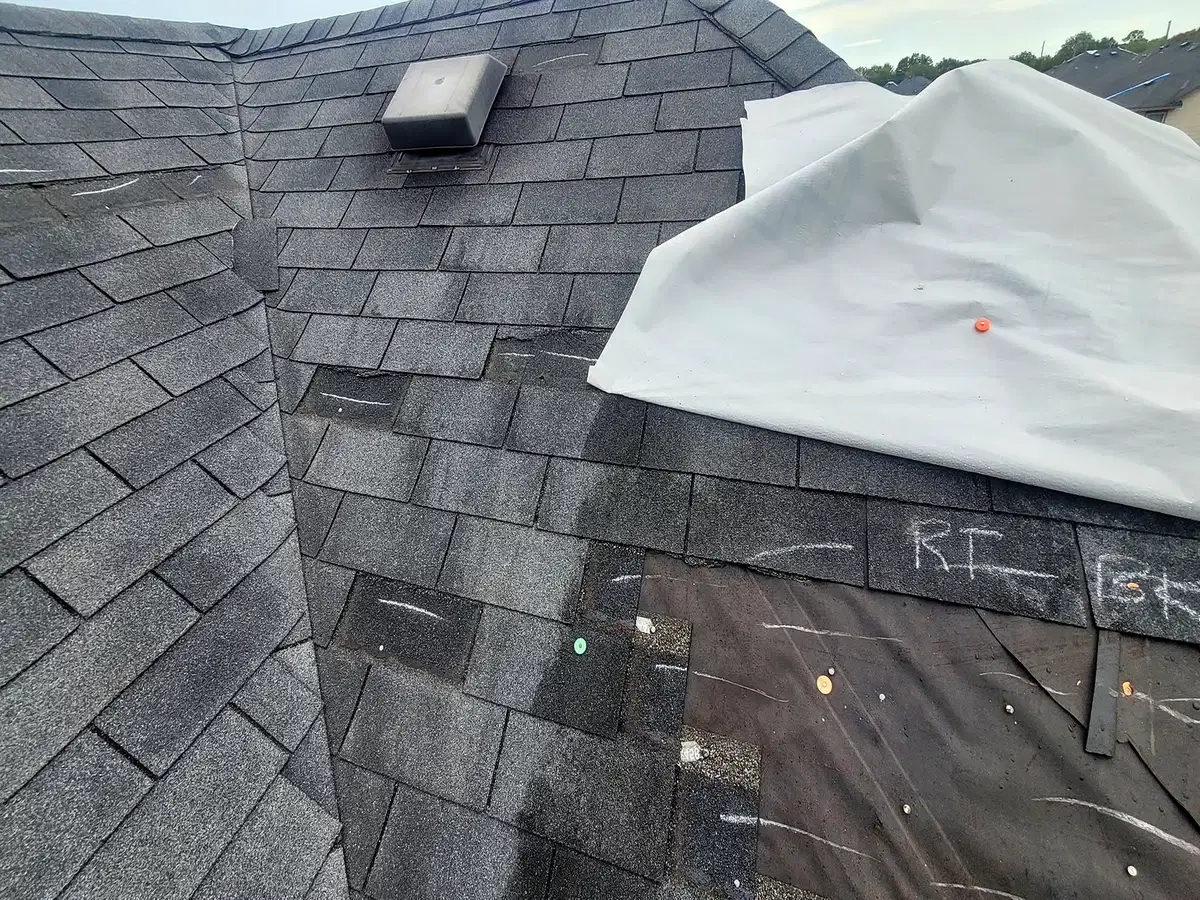
When you need a tarp instead of a repair
A permanent repair is always the goal. But there are three situations in Pearland where a tarp comes first:
- It's still storming. Nobody can safely replace shingles in lightning or high wind, but a crew can often cover an opening once the worst passes.
- A big storm hit the whole area. After a hailstorm, derecho or hurricane, roofers and materials get stretched across the Houston area for weeks. A tarp protects your home while you wait your turn.
- Your insurer needs to see the damage. A tarp stops further damage without erasing what the adjuster needs to inspect.
What a proper emergency tarp looks like
Blue tarps after storms are a familiar sight on the Gulf Coast — and so are shredded ones two weeks later. The difference is installation. A tarp that's going to hold through more storms is:
- Heavy enough. A thick, UV-resistant poly tarp, not a thin hardware-store sheet that tears in the first gust.
- Run over the ridge. Carried up and over the ridge so water sheds over the top edge instead of running underneath it.
- Fastened with battens. Rolled around wood strips (furring strips or 2x4s) that are screwed down, so the tarp can't pull through nails or flap loose.
- Oversized. Extending well past the damaged area on every side, because water runs sideways under shingles.
- Installed with as few new holes as possible. Fasteners placed where they will be covered by the permanent repair later.
Sandbags alone are a stopgap at best. They slide off pitched roofs and let wind get under the edges.
Why you shouldn't tarp it yourself
Most roof-related injuries happen during storm cleanup. Wet shingles, wind, debris and damaged decking that looks solid but isn't make a storm-damaged roof one of the riskiest places to be. If you do anything yourself, keep it inside the house — buckets, towels, moving furniture — and leave the roof to a roofer with fall protection.
How long can a tarp stay on?
A well-installed tarp can protect a Pearland roof for weeks, and some last a few months. But UV and wind wear them down fast in Texas, and the longer a tarp stays, the more likely water finds a way around it. Treat it as a bridge to the permanent repair: get the estimate scheduled while the tarp goes on.
Emergency tarping costs
| Situation | Typical range |
|---|---|
| Small area (a few missing shingles, one opening) | $300–$600 |
| Medium area or steeper pitch | $600–$1,000 |
| Large area, multiple slopes, or tree damage | $1,000–$1,500+ |
General ranges only. Tree removal is usually priced separately. Keep the receipt — reasonable steps to prevent further damage are commonly part of a storm claim.
Tarps, HOAs and insurance
Temporary emergency tarps are generally allowed in Pearland master-planned communities like Shadow Creek Ranch and Silverlake; the permanent repair is where shingle color and style rules come in. Before the tarp goes on, photograph the damage from the ground. Then follow up with a full inspection — see storm & hail damage repair — and a permanent fix, or a leak repair if the opening is small.