
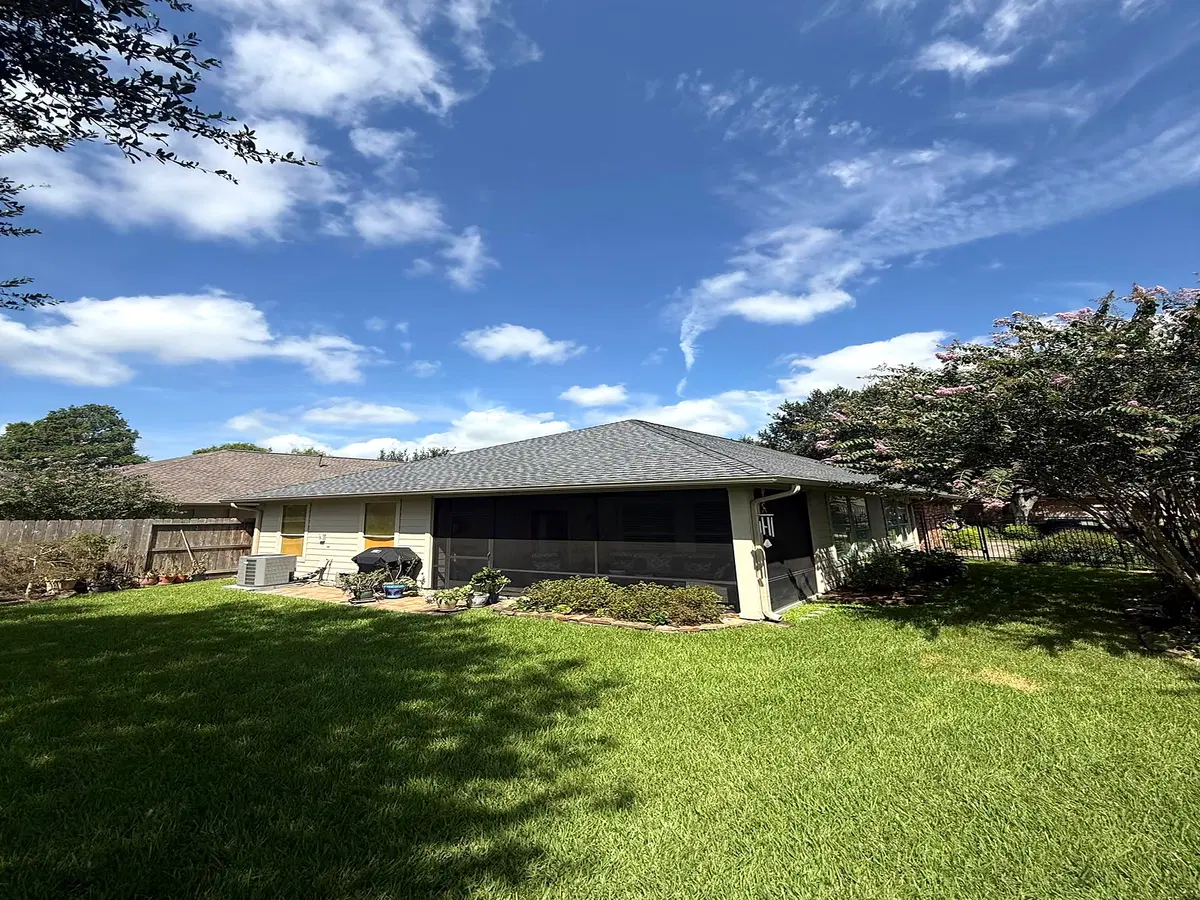
An established neighborhood with second-generation roofs
Southwyck started in the 1980s as part of a larger master-planned development near SH 288. The 1980s oil-bust downturn slowed it, and the area later grew alongside Silverlake; build-out wrapped up around the end of the 1990s. Homes are mostly one- and two-story brick, typically 1,100 to 2,900 square feet, and the neighborhood is organized into sections — Southglen, Emerald Pointe, Southfield Village, Huntington Park, Edgewater Estates, Southmanor, Lakecrest Estates — several with their own associations.
For roofs, that history means two things. First, original shingles from the '80s and '90s have almost all been replaced at least once. Second, a lot of those replacements happened in the 2000s and 2010s — including after Hurricane Ike in 2008 — so many Southwyck roofs are now 15 to 20 years into their second life.
Common roof problems on older Southwyck homes
- Chimney and skylight flashing that has been patched more than once.
- Pipe boots and roof vents from the last replacement, now cracked by UV.
- Decking with past water damage that softens and lets shingles fail early.
- Poor attic ventilation by today's standards, which bakes shingles from below.
- Limb damage from trees that have had 30-plus years to grow over the roof.
Repair now, replace soon?
On a roof that's 15–20 years into its life, a good roofer will often give you both options: the repair that stops today's leak, and a realistic timeline and estimate for a roof replacement. If a storm has caused widespread damage, a post-storm inspection with photos is the first step toward an insurance claim.
If water is coming in
Catch the water, switch off nearby circuits, take photos and call the 24/7 line. A roofer can tarp an opening right away (emergency tarping) and come back for the leak repair.